

NOW AND THEN
Words by Matt Spohn | Photography by Noah Sahady
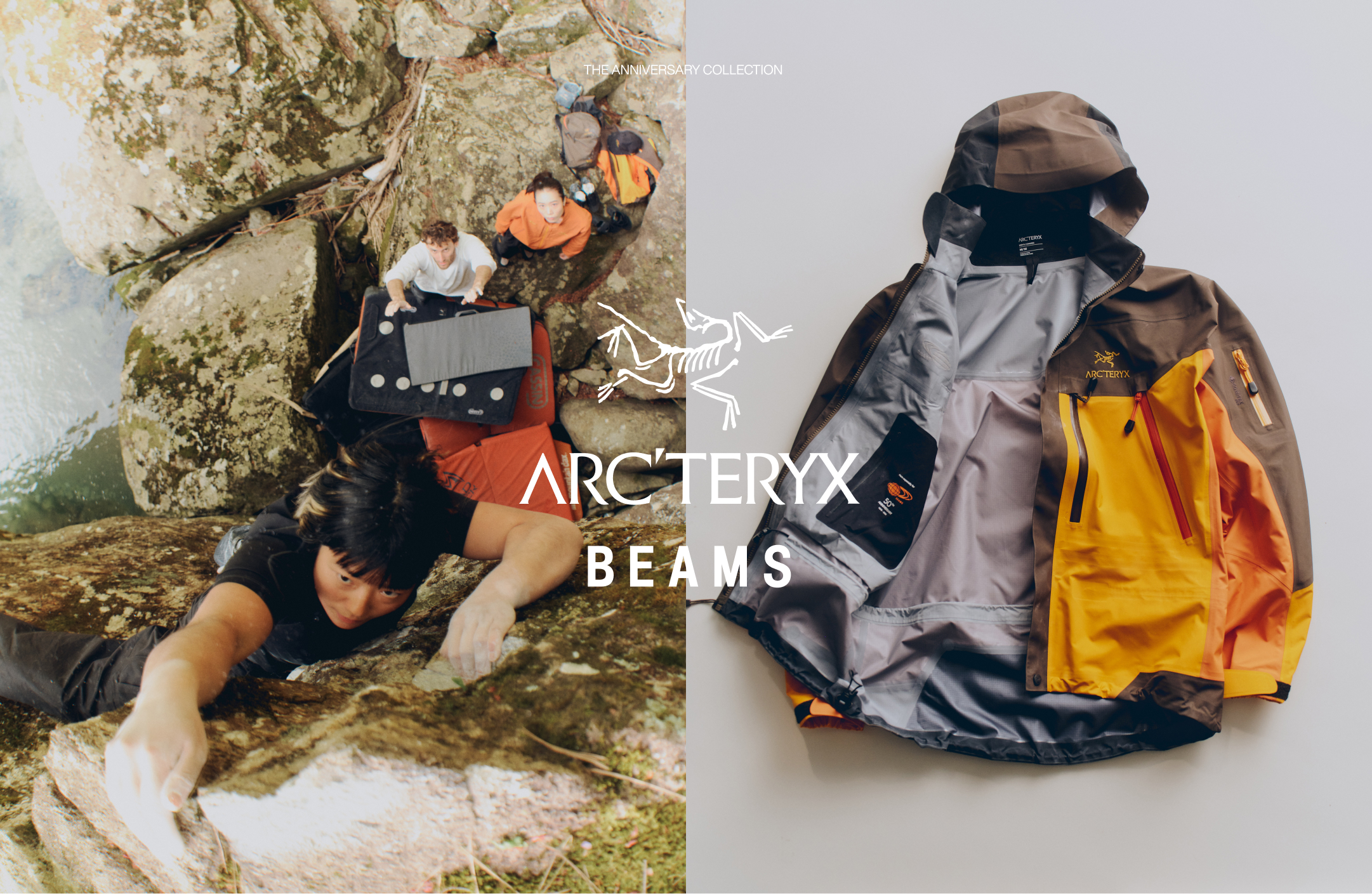
For 25 years, Arc’teryx and BEAMS have bridged worlds, creating expressive pieces that perform in the mountains. To celebrate this enduring partnership, we spoke with the visionary behind the collaboration, Kei Hirosawa, and the group that made the current bouldering kit come to life: Arc’teryx athletes, Ashima Shiraishi, Anon Matsufuji, and Clém Lechaptois, alongside BEAMS buyer Gonzo, and route developer Wataru Suzuki.
From bouldering philosophy and community building to style and laying down roots, these stories reveal the importance of connection and how respect and trust create a foundation for possibility.
The Visionary – Kei Hirosawa
“From the beginning, the point was always to grow together and create something from scratch — something completely new.” —Kei Hirosawa, the Arc’teryx x BEAMS visionary
Kei Hirosawa initially brought the concept of an Arc’teryx x BEAMS collaboration to Arc’teryx in 2001. Having fallen in love with the brand a few years prior, the BEAMS buyer instantly knew he wanted to find a way to unite the companies. “I first laid eyes on the Theta AR Jacket at the 1998 Outdoor Retailer show. I vividly recall being struck; it featured a design unlike anything I had ever seen before.”
Teaming up with designers at Arc’teryx, Kei helped produce the first co-branded piece, the Sebring 25 Backpack.
In what ways are mountain and street culture similar?
If I had to name one similarity, it would be the way things change over time, the way we climb, the way we ride, and our style. Driven by the evolution of tools and equipment. Driven by the exchange of ideas. Driven by friendship.
What drew you to Arc’teryx?
Arc’teryx was simply making exceptional products. The design, materials, and construction were all outstanding and cutting-edge. No one else was going out on a limb and trying these things.
The exceptional design, the development of advanced materials, construction methods — it was all new to me. The craft spoke for itself: Every single stitch is made with intention. These were, and still are, works on another level.
What is special about the partnership between BEAMS and Arc’teryx?
The pieces are designed for climbing and skiing — for the mountains. Yet, they represent ideas that go far beyond what was ever imagined in traditional outdoor gear. They connect people everywhere, from all walks of life.
In Japanese terms, it feels like [the work of] Rosanjin. In a Western context, perhaps someone like Leonardo da Vinci comes to mind. The mindset of creating something entirely from zero … that’s what excites me.
How did the partnership push the boundaries of design, style, and sport?
If it doesn’t exist, let’s create it.
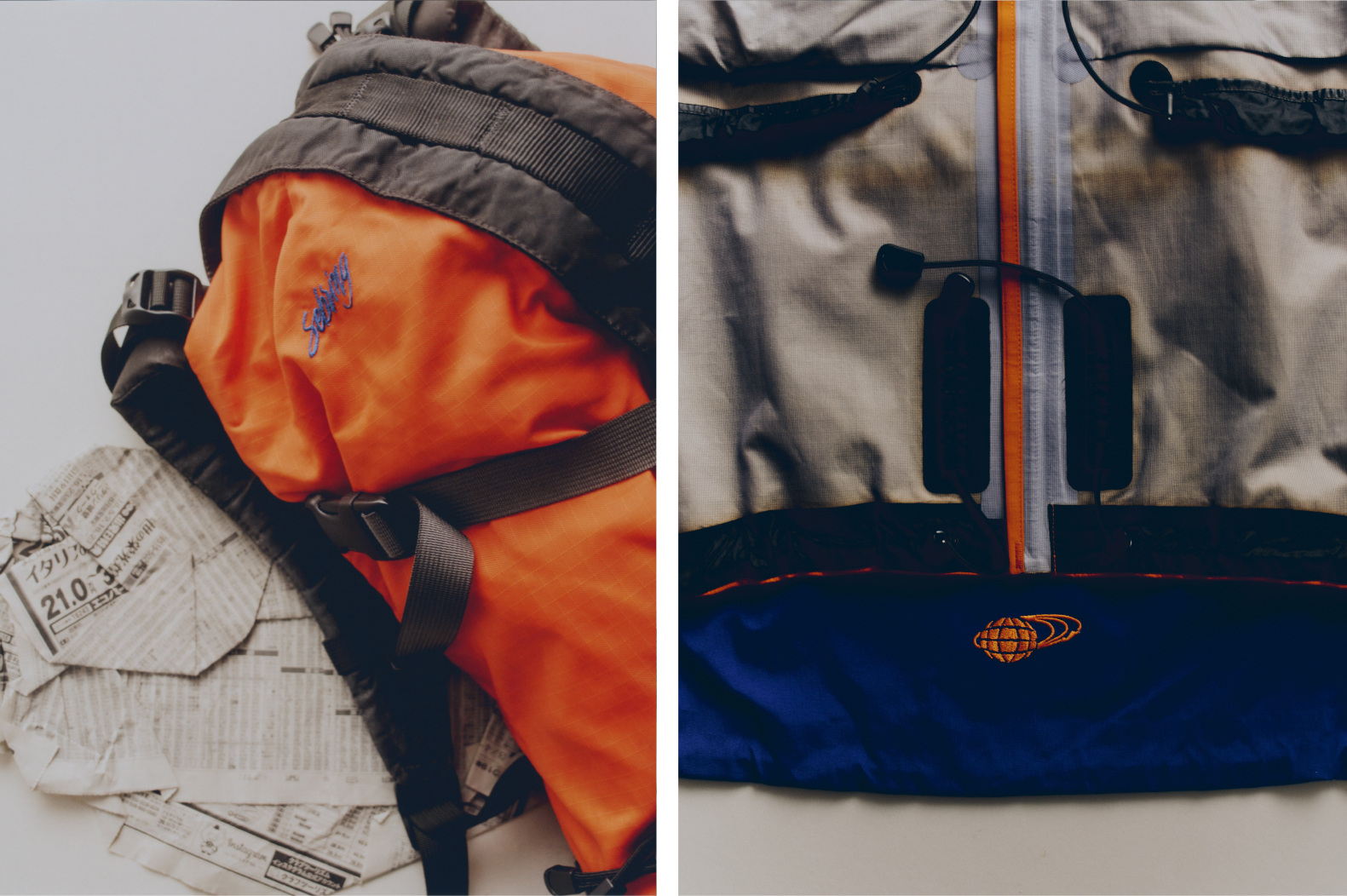
2001 Sebring 25 Backpack: The first piece. Finally colour. (left)
2006 Theta AR Jacket: Refined rain protection. Three chest pockets. (right)
The Community Effect – Ashima Shiraishi
“Climbing can be a vulnerable experience because of how much you devote and sacrifice towards a climb. You want to be around people you can trust and feel comfortable regardless of whether you send or not.” —Ashima Shiraishi, Arc’teryx athlete
Whether it’s climbing or fashion, style of movement or style of dress, the influence of community cannot be overlooked. Beta is shared, clothes are exchanged, a vernacular of expression is acquired.
For Arc’teryx athlete, Ashima Shiraishi, the creativity and individualism of climbing and street culture share a similar foundation. “With climbing, you get to express yourself in this bodily way,” she says. “At the same time, the garments we wear reveal a bit of our identity too.”
Growing up in New York, she learned to surround herself with people who had unique styles and different backgrounds.“These connections and the sharing that ensued continue to be important to my development as an athlete and as someone who loves to create,” she says.
But both climbing and self-expression require trust and comfort. “You won’t try something if you don’t feel safe,” says Ashima. “At the crag, regardless of whether you send or not, you want to feel at ease and enjoy the experience. To show up authentically, you want to be around people you trust with your safety and emotional well-being.”
Confidence is required to excel — yet, the fact that climbing is linked to vulnerability can be unifying. “If someone is trying a route, it’s quite easy to join in and participate in the sharing of the experience and the process of trying the climb, no matter if you fall.”
Even when traveling, even outside of a shared language, climbing brings people together. “Over the years, I’ve found that the movement of climbing extends to something beyond and before language,” says Ashima.
Touching stone, miming a path up a boulder, holding your hands up to catch a falling friend: These actions represent a gesture toward connection.
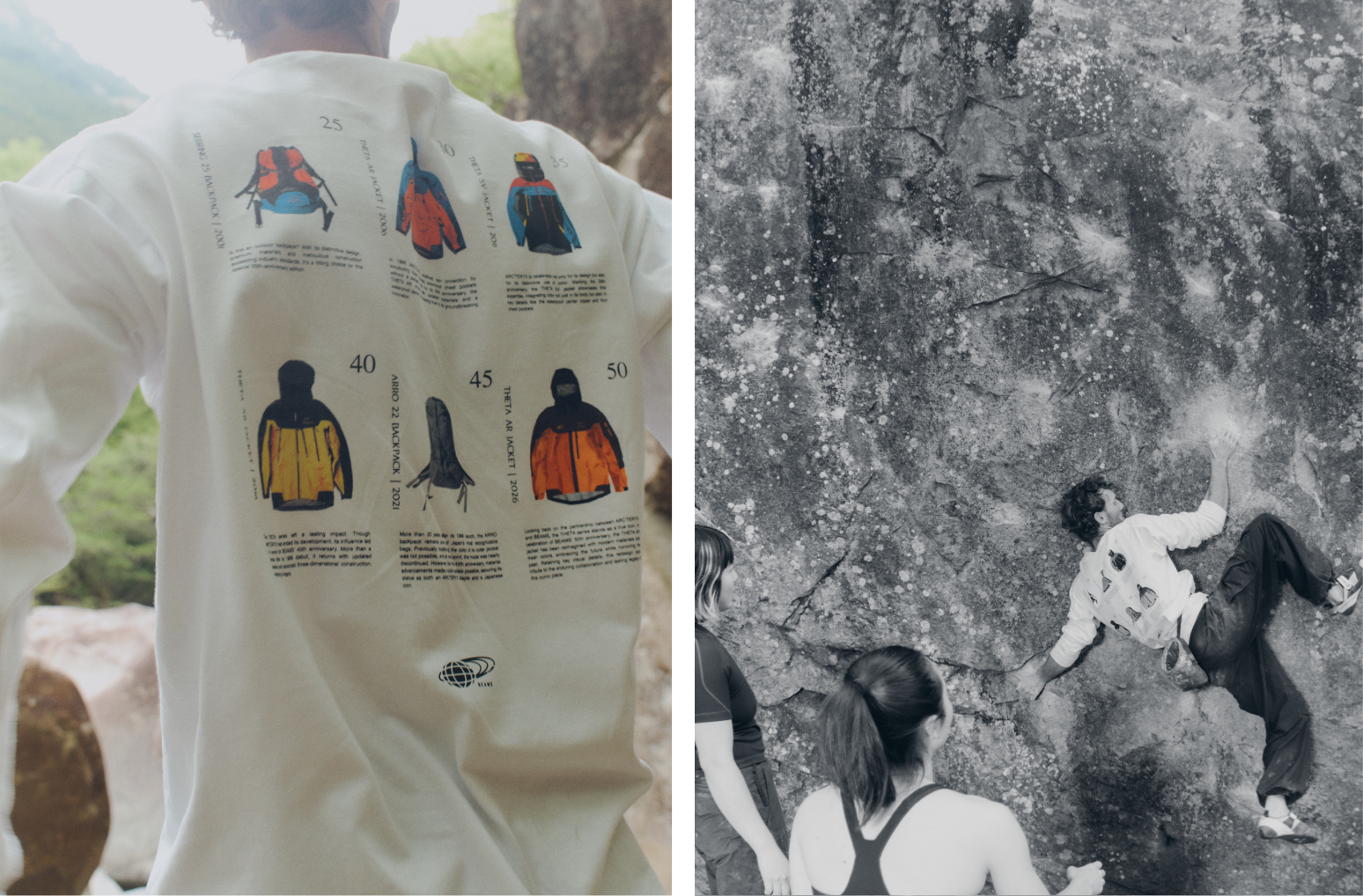
Clément Lechaptois, Ashima Shiraishi and Anon Matsufuji | Mazenishimura, Gifu, Japan
A Better Way – Clém Lechaptois
“Sometimes you find a way to do a move, but it feels forced. When I invest a lot of myself into a climb, I need to find the best way. Even if it takes extra time, I know there’s a better way.” —Clém Lechaptois, Arc’teryx athlete
“Days alone in the mountains are special — you listen to your own reason and climb for the pureness of it,” says Arc’teryx athlete Clém Lechaptois. “You’re not worried about if it’s cool. You’re focused on the movement and the possibility of unlocking a way forward. You uncover the reasons you climb.”
These reasons, while personal, can also be a source of connection with other climbers. And when they align, great partnerships form. “Understanding where someone is coming from and finding a shared passion allows you to push yourself outside your comfort zone,” says Clém. “A good partner is necessary to continue to grow as a climber.”
For Clém, connection and trust create a go for it mentality. Energy and optimism are contagious. But a good partner understands when to bring excitement and when to back off. “There’s a need for balance. You need to encourage your friends, but sometimes taking a step back and leaving space for them to figure it out is more important,” he says. “You move the pads, you spot, you look at new options, you give encouragement. Then you let them climb.”
Send or fall, onsight or long-term project, the right partner makes all the difference. “It’s important to emit that ‘I’m here if you need me’ feeling,” Clém says. “To be encouraging, but not too much. To remind your partner that frustration is okay — that we can take a break and move on to another boulder. Or, we can stay here all day and figure out the moves together.”
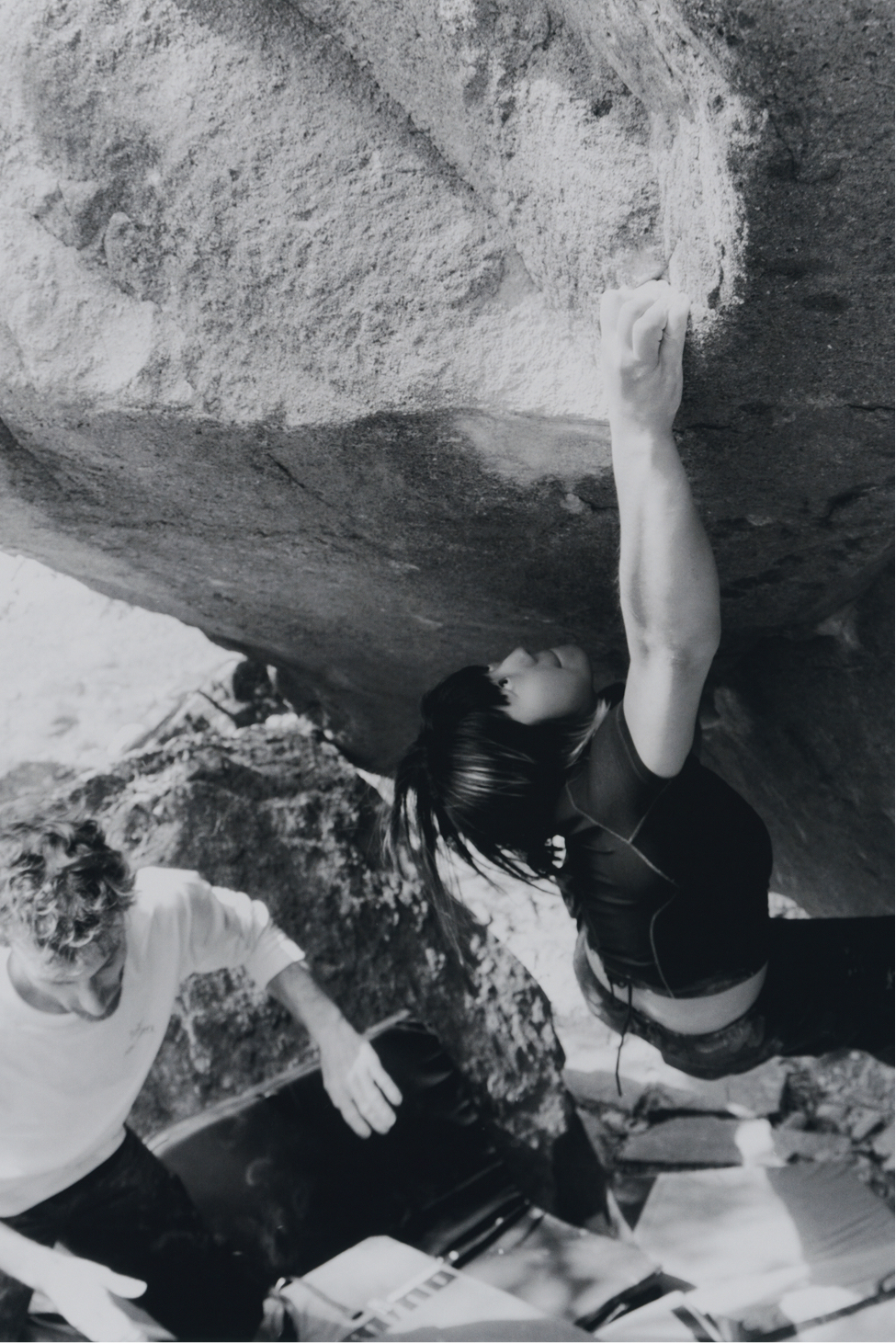
Ashima Shiraishi and Clément Lechaptois | Mazenishimura, Gifu, Japan
Blazing Trails – Anon Matsufuji
“Climbing isn’t just a sport — it’s a language, and every move I make is part of what I’m trying to say.” —Anon Matsufuji
Arc’teryx athlete Anon Matsufuji, approaches climbing as self-expression. “The routes I choose, the way I move on the wall, even the clothes I wear — it all reflects something about me,” she says. “I don’t just want to reach the top; I want the movement itself to look and feel like me. When the style of a climb matches my own, I can flow through it in a way that feels both powerful and beautiful.”
While climbing with Ashima and Clém, Anon sent a what had seemed, earlier in the day, like a nearly impossible route. As she described it, “even during the hotter attempts earlier in the day, I could already visualize completing the route. As evening came, I felt the conditions improving, and I knew the only thing left was to push myself mentally. The moment I felt ‘ready’ wasn’t something dramatic — it was more that the desire to climb it became unshakable inside me. That feeling alone was enough to move me.”
It’s a good example of how she thinks about a problem. “For me the perfect boulder is one that helps you grow as a climber. Not too hard that it feels impossible, but not so easy that you learn nothing. Every attempt teaches you something, and when you finally send it, you feel like you’ve become a slightly better climber.”
She’ll even return to certain climbs. “When I fully connect with a route, it feels like I’ve merged with nature itself. When I find something that feels incredibly fun, I keep coming back — because I want to climb it better, more beautifully each time.”
When Anon met up with Ashima and Clém, it was her first time out with climbers from outside Japan. “The difference in vibes was immediately striking,” she recalls. And she appreciated the way they didn’t seem focused on just sending a problem. “What I felt from them was more about how to enjoy that climb, on that day, in that moment.” Partnership, she says, “is about sharing something genuine.”
For me, climbing is one of the most direct ways I can express who I am. The routes I choose, the way I move on the wall, even the clothes I wear — it all reflects something about me. I don’t just want to reach the top; I want the movement itself to look and feel like me. When the style of a climb matches my own, and I can flow through it in a way that feels both powerful and beautiful, that’s when I feel most like myself. Climbing isn’t just a sport — it’s a language, and every move I make is part of what I’m trying to say.
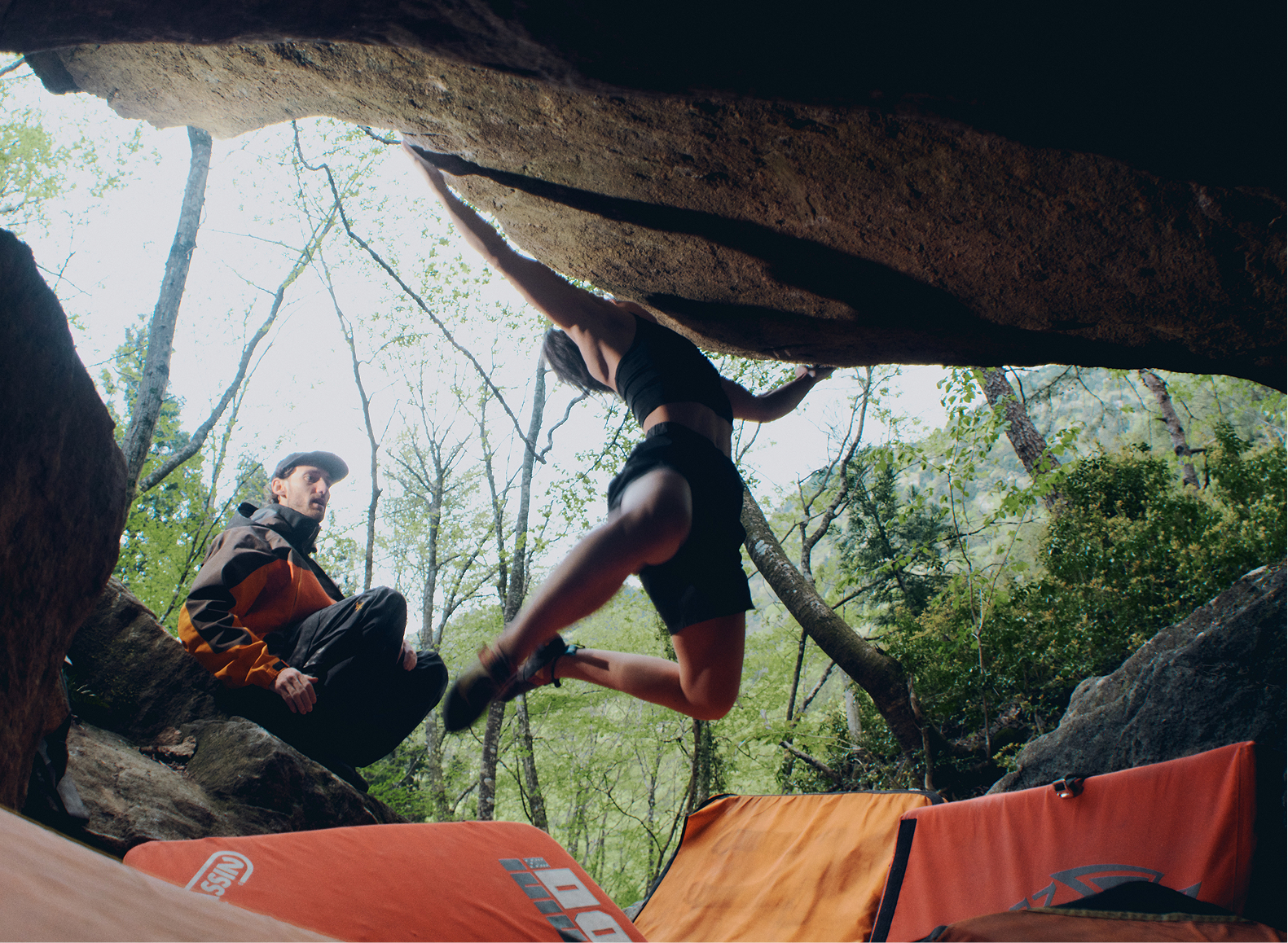
Clément Lechaptois and Anon Matsufuji | Mazenishimura, Gifu, Japan
Bridging Worlds – Gonzo
“I feel connected when I go to the bouldering gym. It’s a spot where people meet up in an organic way and build community. It’s the same on the street and in the fashion industry. I go out, meet people, and make friends.” —Gonzo, BEAMS buyer
Widely known as Gonzo and sometimes Ikkyu-san (affectionately named for his witty personality), Keita Kobayashi is a leading figure behind the ongoing Arc’teryx x BEAMS collaboration. A prominent buyer for the Japanese lifestyle brand BEAMS, he sees trust and mutual respect as the leading reasons the brands continue to set the standard for high-profile collaborations.
Gonzo’s first experience with Arc’teryx came well before he worked for BEAMS. Living in Seattle, WA, where he recalls, “the weather is rain, all the time,” he went to the local outdoor store to get a jacket. “Someone at the store pointed me to the Arc’teryx rack. I loved the way they looked and got one primarily as a fashion piece. But after I saw everyone wearing Arc’teryx around the city, and after I saw how well it worked, I was like, oh, this is real gear.”
About the partnership he says, “it’s incredibly unique, the crossover between mountain sport, fashion, and culture is completely fresh. It’s a place where high-end innovation, style sensibilities, and perspectives merge — a place where new values are born.”
The overlap between the brands goes beyond impeccable craftmanship. It’s about recognizing and accepting what each brings to the table. For BEAMS, it’s the style sensibility. For Arc’teryx, it’s progressive innovation and craft.
Remembering the pre-2001 monotone look of Arc’teryx, Gonzo laugh. “The angles, the cut of Arc’teryx was so unique, but the old colours felt robotic.” BEAMS brought experimental colour blocking that fit into city fashion. “It added a nice vintage aesthetic that made the look more playful. Urban funny is what we called it.”
Building a bridge from mountain life to city life is, for many, what makes the collaboration appealing. “We’re all multi-faceted,” Gonzo says. “Each person’s style is an amalgamation born from curiosity. This new drop is somewhere between serious bouldering and street culture. The colours are iconic now — they’re expressive and energized. Even joyful. Paired with the exceptional design of Arc’teryx, our partnership is unstoppable.”
In climbing as in fashion, it’s better to say nothing and just make a splash. “Climbers have these rebellious, big, and daring personalities. So do people in the fashion industry,” says Gonzo. “It’s a perfect fit and the influence is mutual.”
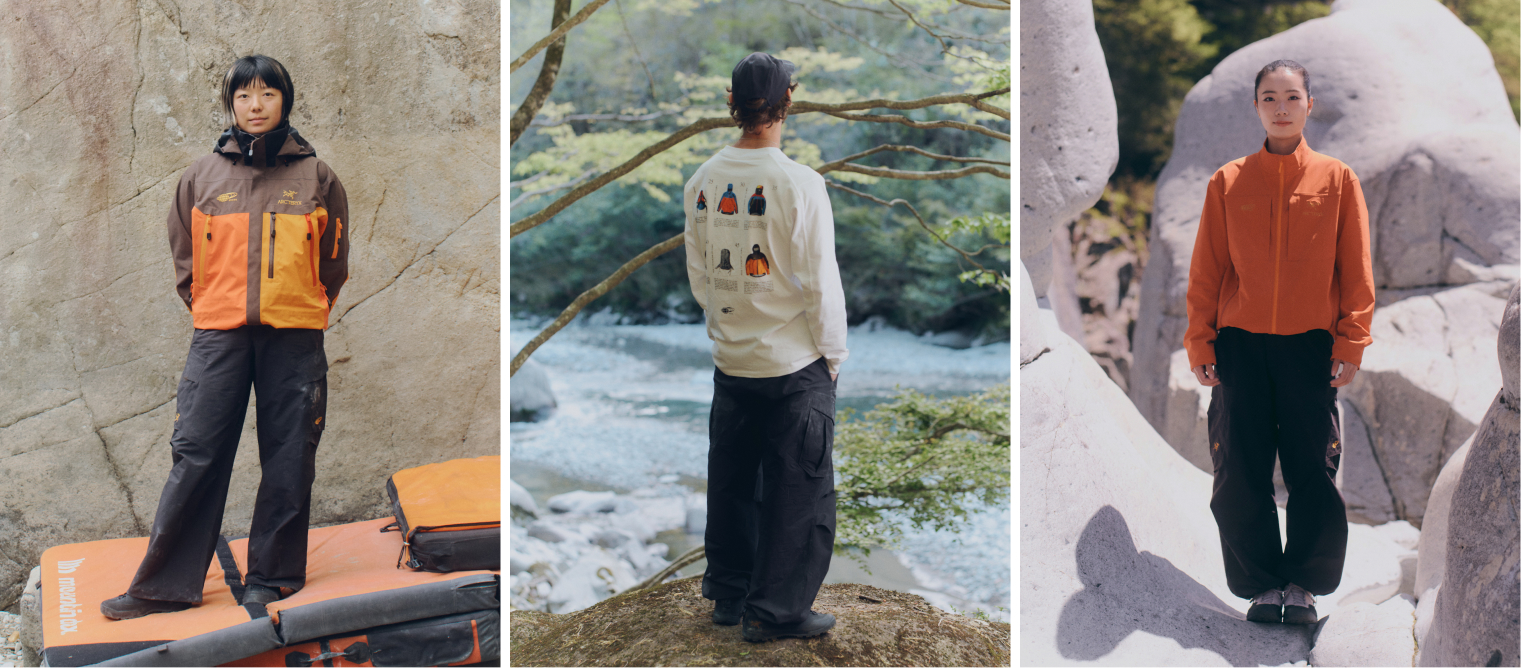
Ashima Shiraishi, Clément Lechaptois and Anon Matsufuji | Mazenishimura, Gifu, Japan
Building Community – Wataru Suzuki
“Climbing is a sport where everyone, without exception, must repeat the act of “failing…this brings us together..” —Wataru Suzuki , guidebook author
Wataru Suzuki has a simple philosophy: bring people outdoors, let them experience place through climbing, and teach them to savor everything an area has to offer.
In the intro to the bouldering guidebook he helped author, Hida Kanayama Maze, Wataru Suzuki writes, “we encourage you to look beyond the boulders…you will find things here that enrich your life.”
In talking about his path from television producer to owner of the Reboulder Kanayama climbing gym, Suzuki says, “what started as a personal obsession to test my own strength evolved into a shared experience built on human connection.” For him, the full experience of bouldering is a journey. “It begins with the personal, expands into community building, and ultimately flows into inspiring and nurturing the next generation.”
Even in the place Wataru has called home for eight years, he continues to find newness. “I know this area inside and out, but the entire landscape transforms under the cover of darkness. All the distractions of the surrounding world are swallowed by the night, leaving only the rock illuminated by my light. In that profound silence, as I go through the trial and error of figuring out how to move my body, my mind becomes entirely dialed into the present moment.”
Wataru wants others to experience this connection. For him, publishing a guidebook serves a dual purpose. It brings passionate climbers into the area, which boosts the local economy, and it showcases the unique value of the boulders to locals. “What we are aiming for is not a place where only climbers go,” he says. “A climbing area endures when it is loved by non-climbers and recognized as a value to the local community.”
His invitation to climbers is to put down roots and form these connections.
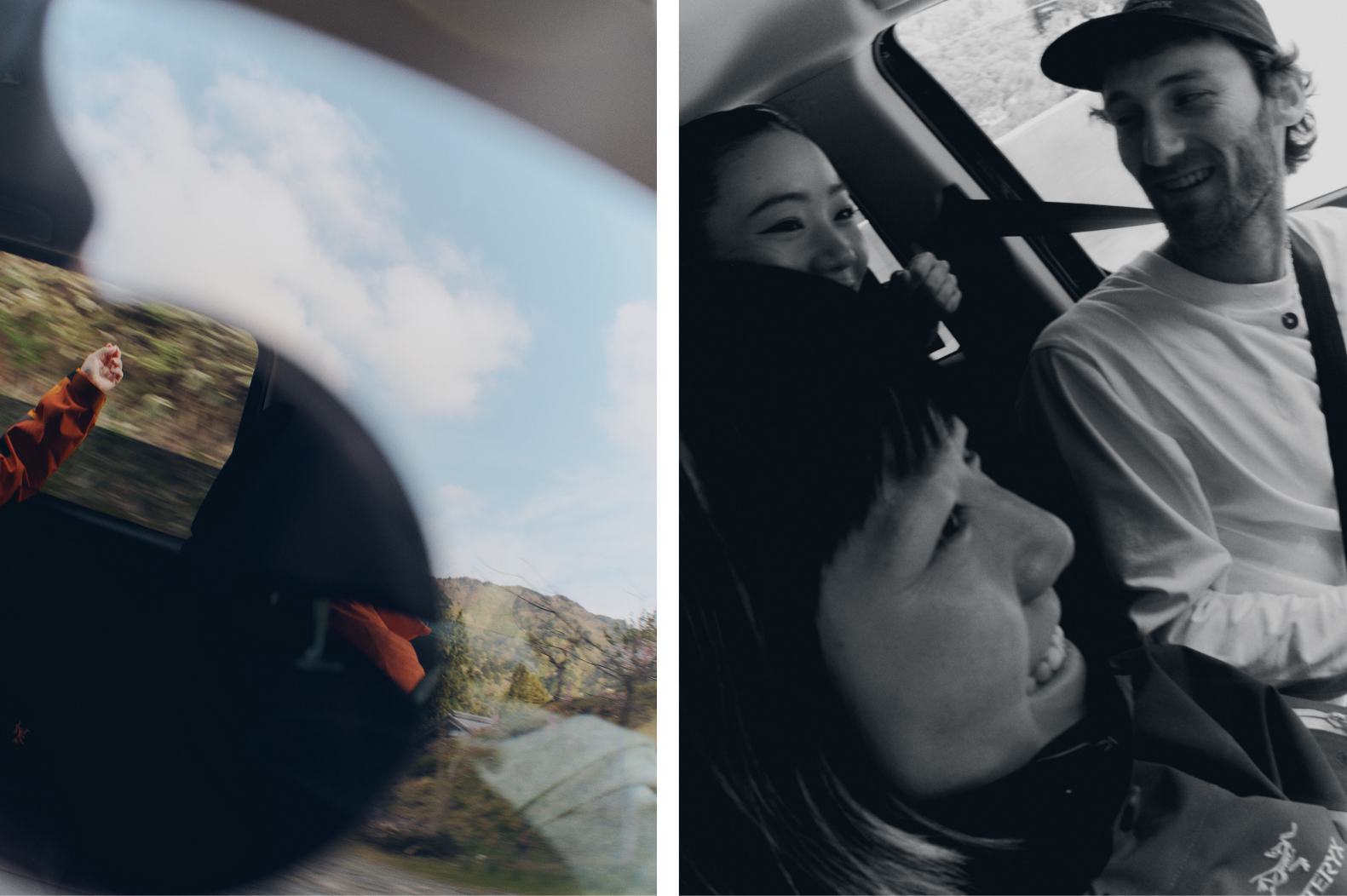
Ashima Shiraishi, Clément Lechaptois and Anon Matsufuji | Mazenishimura, Gifu, Japan