

MORE THAN A T-SHIRT
Words by Bryan Sparrow | Photography by Rendell Catbagan
This story features the words of a Canadian residential school Survivor. Please take care when viewing.
Sitting on set across from Indian residential school Survivor and Orange Shirt Society co-founder, Phyllis Webstad, I was reminded of the courageous and resilient women in my own family. In the quiet moments between interview questions for Walk Gently’s first Every Child Matters campaign, my thoughts drifted to my two grandmas: one Saulteaux Cree and one of settler ancestry who married an Indigenous man. I thought about the strength of my Kokum, Doris, who fought for Indigenous women’s rights through Bill C-31 in the 1980s, and my Nanny, Helen, who raised ten children on her own after her husband, Chief Willard, another residential school Survivor, died at just 40-years-old. Through their words and perseverance, they ensured our family history would not be forgotten or buried, even when generations of policies designed to erase Indigenous voices were against them.
As a member of the Sparrow family from xʷməθkʷəy̓əm (Musqueam), stories like my grandmas’ are not confined to archives or court cases. They are woven into my family, shaping who I am and how I understand the world. Sitting across from Phyllis that day, I was reminded of the power of sharing and the responsibility we have to speak up, even when it feels impossible.
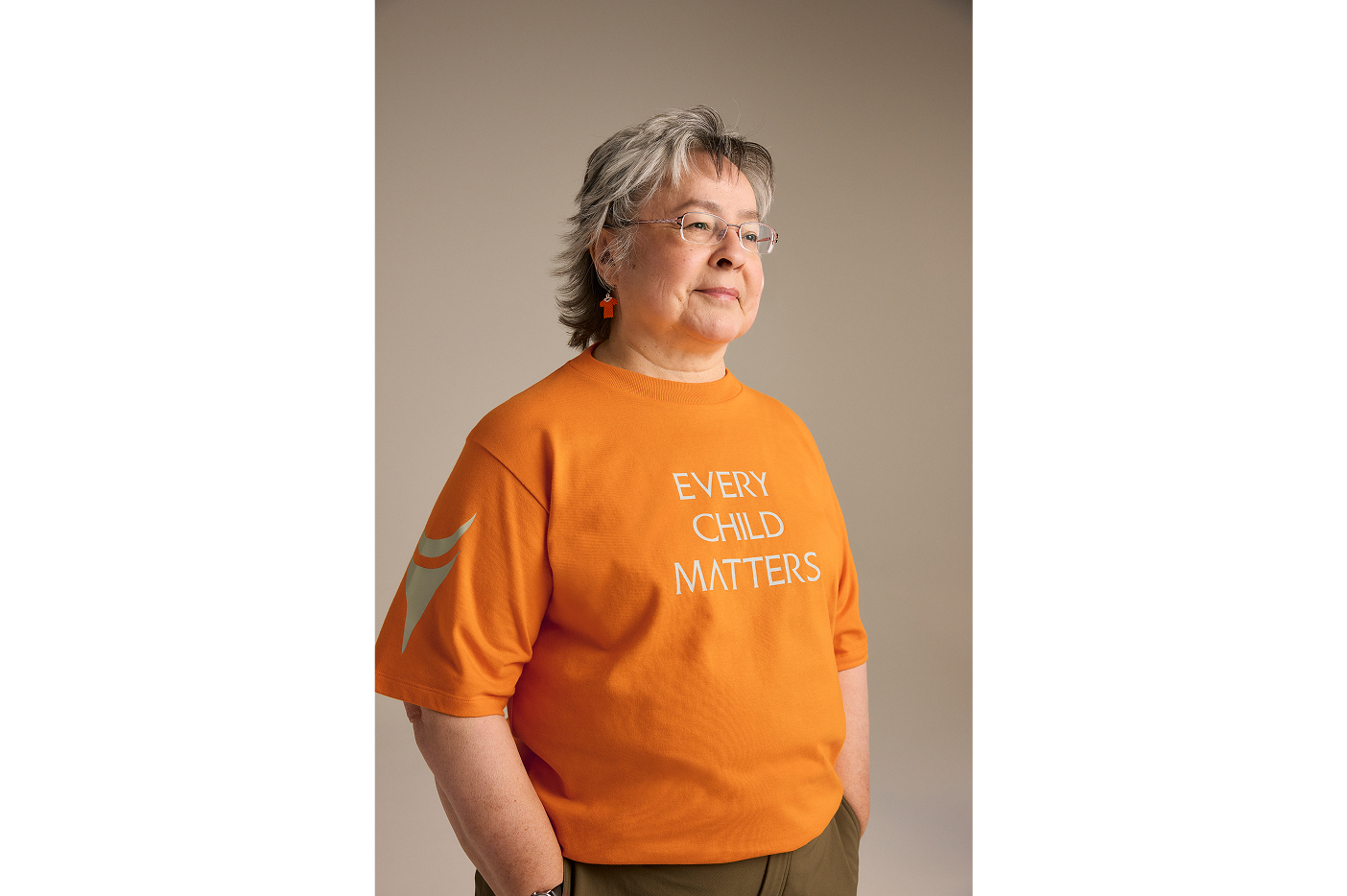
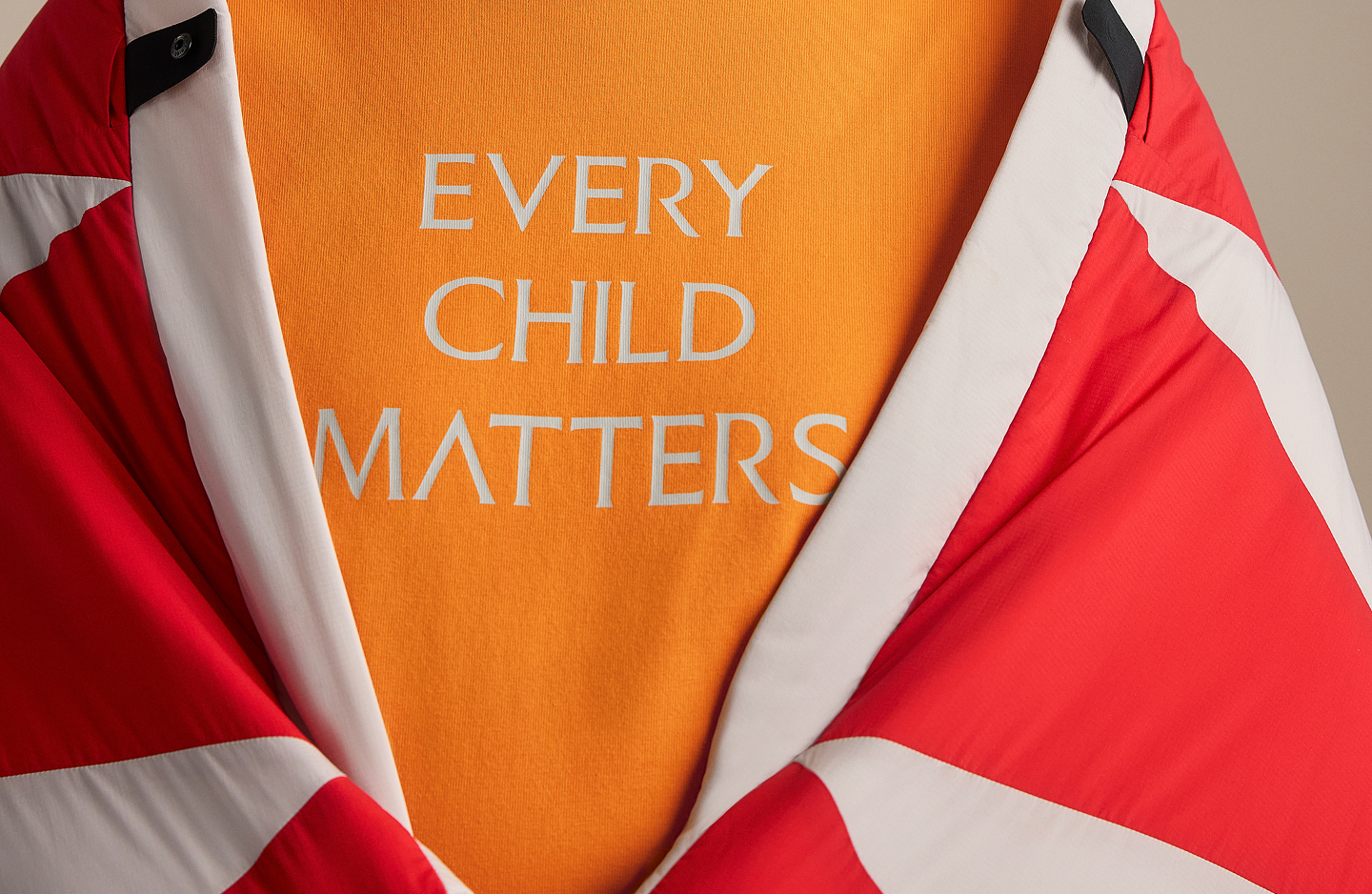
At six-years-old, Phyllis had her brand-new orange shirt taken from her on her first day at St. Joseph Mission Residential School. This moment, a deliberate act of removal, has become a symbol of something much greater: the systemic stripping of identity, family, and dignity from Indigenous children across Canada. Today, Phyllis’s willingness to share her story has sparked a movement that continues to educate and inspire communities around the world.
While her trauma has raised awareness of the cultural genocide tied to residential schools in Canada, what surprised me most was how familiar Phyllis felt. She reminded me of one of my aunties: funny, warm, and quick to make you feel welcome. Even when discussing the most painful parts of her life, she held herself with kindness and an authenticity that drew the whole room in. She has a gift for making people listen, not because she’s commanding your attention, but because she speaks from her heart.
During our conversation, one thing she said stayed with me:
“Some days I feel like giving up. But it doesn’t last long. I have a good sleep, I get up, get ready, and do my best again for today…What gives me hope is my grandchildren, knowing where they come from, where they are, and what’s possible for them.”
As Phyllis spoke about her grandchildren, I thought about how much can change in one generation. For most of my childhood, being half Indigenous felt like something I carried as a secret. Growing up in Vancouver, I was acutely aware of the stereotypes, prejudice, and misconceptions that often come with my heritage. There were times when I saw that part of myself as a weakness rather than a strength, and it’s taken me years of unlearningand reconnecting with my family to understand that it’s something to be embraced.

I still have a lot of self-work to do, but that is why Walk Gently’s partnership with the Orange Shirt Society feels so meaningful to me. Both organizations are working to create space for Indigenous voices to be heard, seen, and championed. It’s a vision that has been at the heart of our work since my cousin, Cole Sparrow-Crawford, founded Walk Gently with Arc’teryx. While the Society continues its vital work educating people about the lasting repercussions of Indian residential schools in Canada, Walk Gently is helping break barriers in the outdoor industry by creating opportunities for Indigenous stories, designs, and leadership to be seen, shared, and celebrated.
Spending the day with Phyllis reaffirmed that storytelling is one of the most powerful tools we have. It’s how we honour those who never made it home, how we educate those who come after us, and how we create space for others to see themselves represented in those narratives. For me, this partnership represents the kind of future my grandmothers hoped for: one where I can be proud of who I am. A future where Indigenous children cangrow up knowing that their stories and voices matter. A future where every child matters.