

BETWEEN DAYS
What happens when nine riders from four countries touch down in the Japanese Alps in the midst of a season-defining storm cycle? The universal language of ‘dig yourself out, lap until your legs give out, and do it all again’ removes any barriers that may have existed, and a silent bond is forged through the immersive experience that storm riding brings. Linking up with snowboard legend Tadashi Fuse, follow along as the Arc’teryx team searches high, low and everywhere in between for deep turns and unforgettable times.
Film by Alex Craig | Photography by Mason Mashon & Perly | Words by Ben Osborne
For more than 25 years, Tadashi Fuse has made a name for himself by pushing progression in snowboarding, paving the way for generations of riders to come. What’s kept him going? A deep passion for sharing the beauty of the mountains he’s built his career in. Go behind the scenes and back to the nascent days of the sport with Tadashi and the Arc’teryx crew while filming for Between Days.
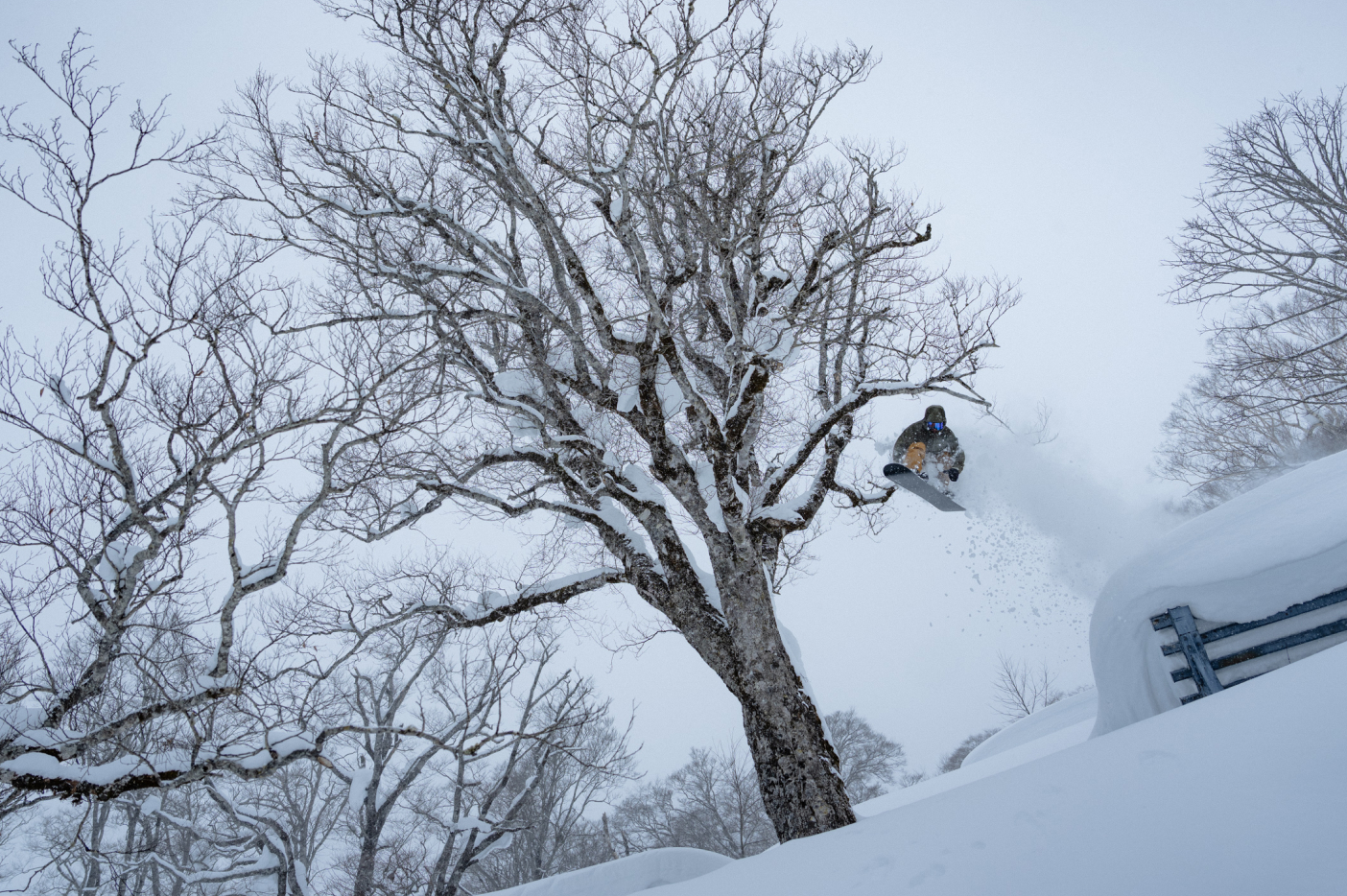
With an annual snowfall that regularly exceeds 10 metres, it’s hard to discern what’s going on beneath a mid-January snowpack in Japan. The world above, or what we see, can be deceiving when imagining what’s below. Thick-trunked maples that stand tall in the summer tend to protrude just above the snowpack’s surface, and bent-over branches stacked high with snow could catapult to life in late spring.
Above the snowpack, Tadashi Fuse bobs left, right, back, and forth, swaying to the rhythm of a chairlift decades past its prime. Below the chair, a rider arches turns through freshly printed corduroy, prompting a “yip!” from Tadashi, and a mirrored reply from the carver.
There are few regulars at Tadashi’s home resort, and he knows most of them—like the rider crouched low coming out of a bottom-turn below, who happens to have introduced Tadashi to snowboarding almost 30 years ago. And most of them know Tadashi: a rider who charted his own course, a nexus between the origins of snowboarding in Japan and the big mountain freestyle movement, and perhaps most importantly, someone who has stayed focused on sharing the joy of a well-placed turn.
Early Ups
Tadashi was born on Honshu, the biggest in the chain of islands that make up Japan. Each winter, cold air masses swing down from Siberia, scoop up the moisture of the Sea of Japan, and eventually collide with the mountain ranges scattered along the west coast of the island. The result? Epic amounts of precipitation combined with frigid temperatures that build not just a bottomless snowpack, but also a strong foundation for a ski and snowboard industry over a century in the making.
The modern version of skiing side-stepped into Japan from the Alps in the early 1900s. By 1920, ski resorts started to pop up, and by the 1950s skiing was becoming a staple of Japanese culture. By 1990, roughly 700 ski areas were in operation across the country. Around that same time, a new sport, interchangeably referred to as “snow-surfing” or “snowboarding”, was pushing its way into the mainstream, first making waves on Hokkaido, Japan’s northern island. In 1994, it had yet to reach Tadashi, then a 16-year-old skier, unaware of the new sport disrupting ski culture and exploding across Europe, North America, and Japan simultaneously. But nonetheless, he was still drawn to the mountains.
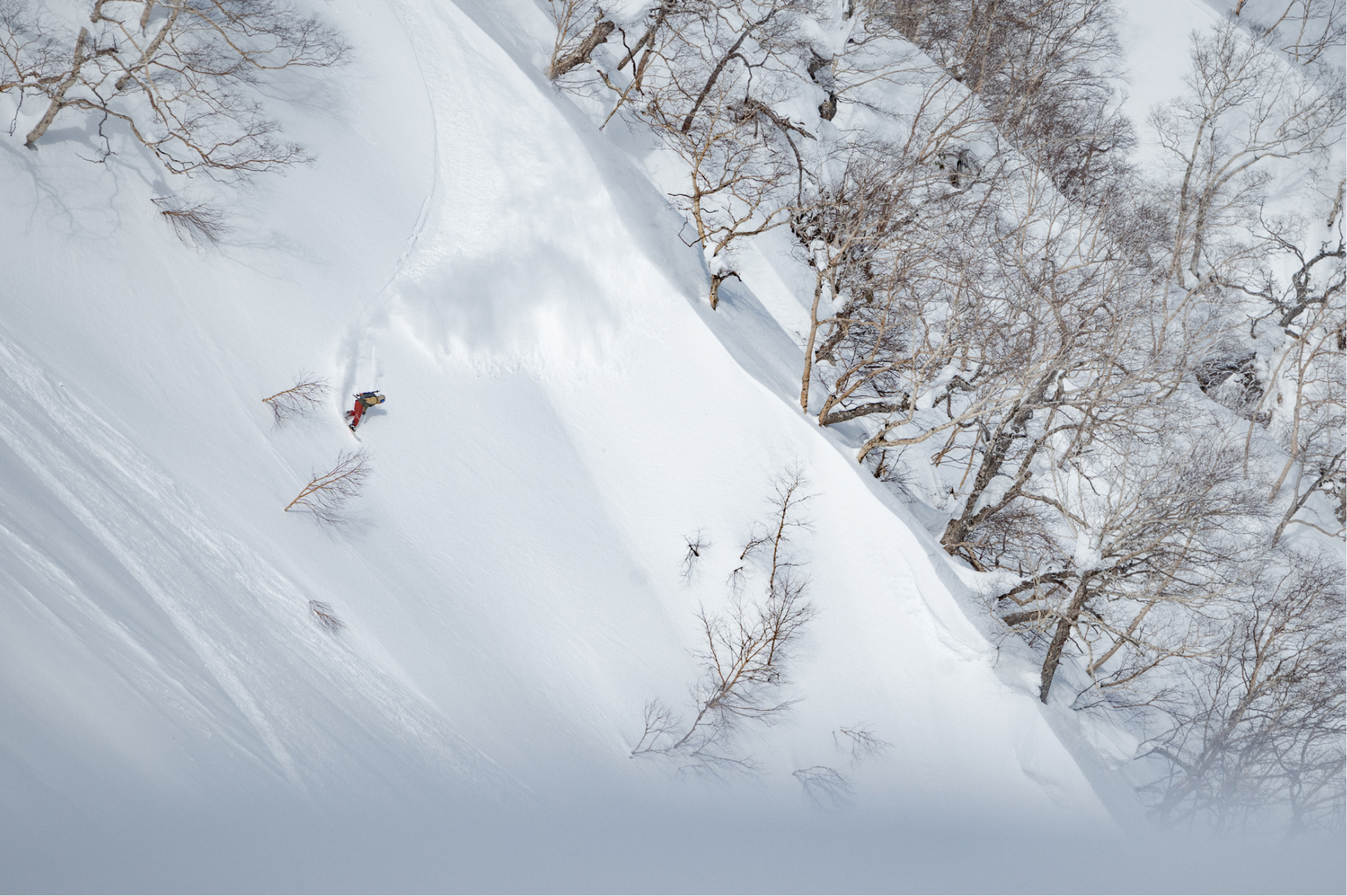
“Every day after elementary school, I used to take my skis and hike around, looking for fresh snow,” Tadashi recalls.
As an avid skateboarder, Tadashi understood the allure of standing sideways, but doing so on snow was just a dream until he had someone else’s lead to follow. That changed when an older skateboarder stumbled across a young Tadashi.
“He was back in town after training at a ramen restaurant in Tokyo. We didn’t know each other, but he saw me skateboarding and was shocked. He couldn’t believe there was another skateboarder in his hometown,” remembers Tadashi. “Then, he showed me a video of snowboarding. Before I ever strapped in, I knew it was the path I wanted to follow in life.”
The video was ‘Road Kill’ featuring freeride icons Bryan Iguchi and Jamie Lynn. A blend of the limitless ethos of the mountains that he knew from skiing and the style and influence of skateboarding, the riding in the film was at the forefront of the burgeoning freeride movement in the ’90s. Known for their ability to throw tricks on snow-stacked terrain in places like British Columbia, Alaska, and Wyoming, the floated spins and playful interaction with high-consequence terrain he saw on screen lit a fire inside Tadashi. This was the type of expression that would push his personal limits. It was the type of inspiration he wanted to bring to riders from Japan and beyond.
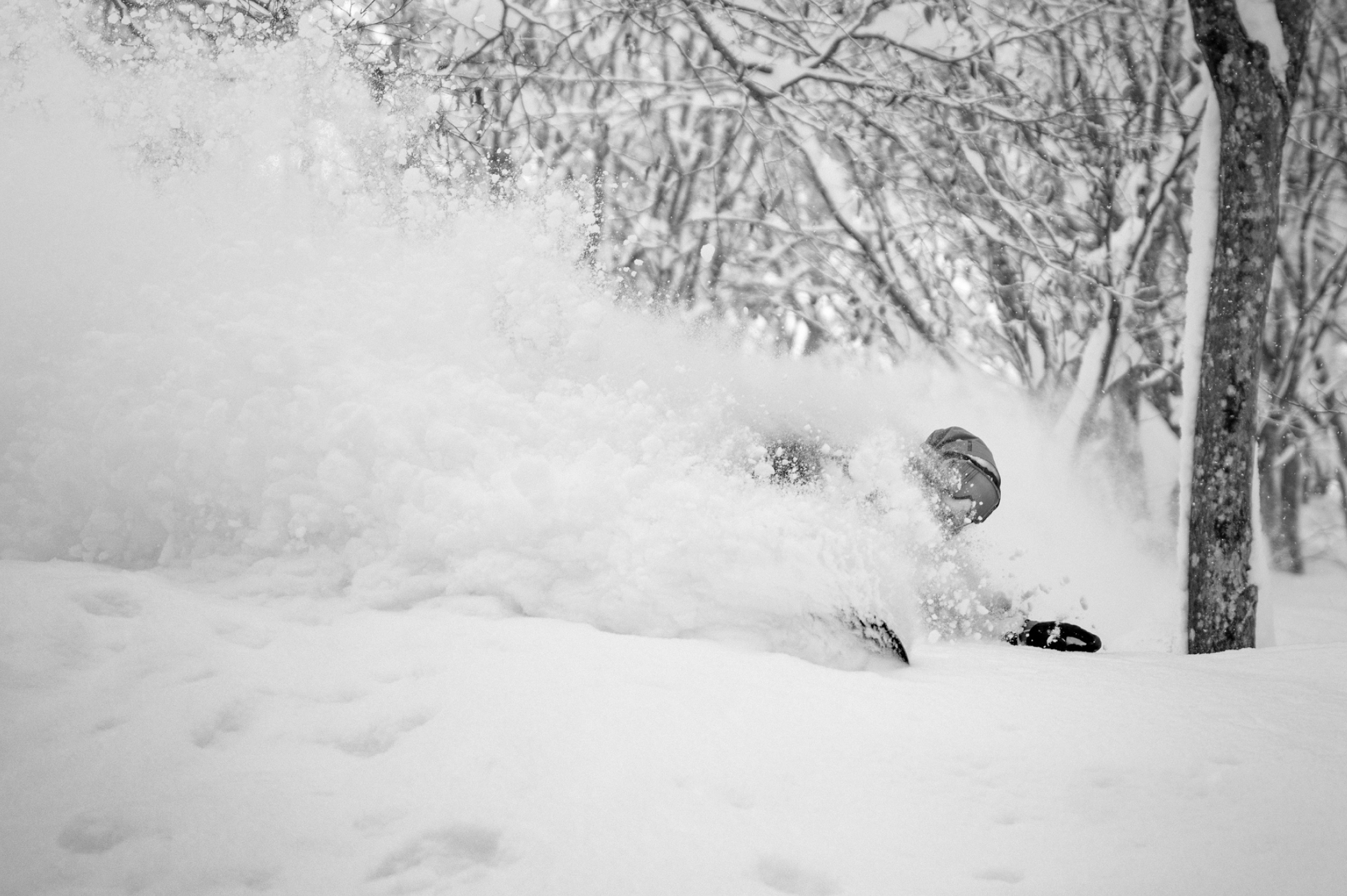
“Then, he showed me a video of snowboarding. Before I ever strapped in, I knew it was the path I wanted to follow in life.”
Tadashi’s Rise
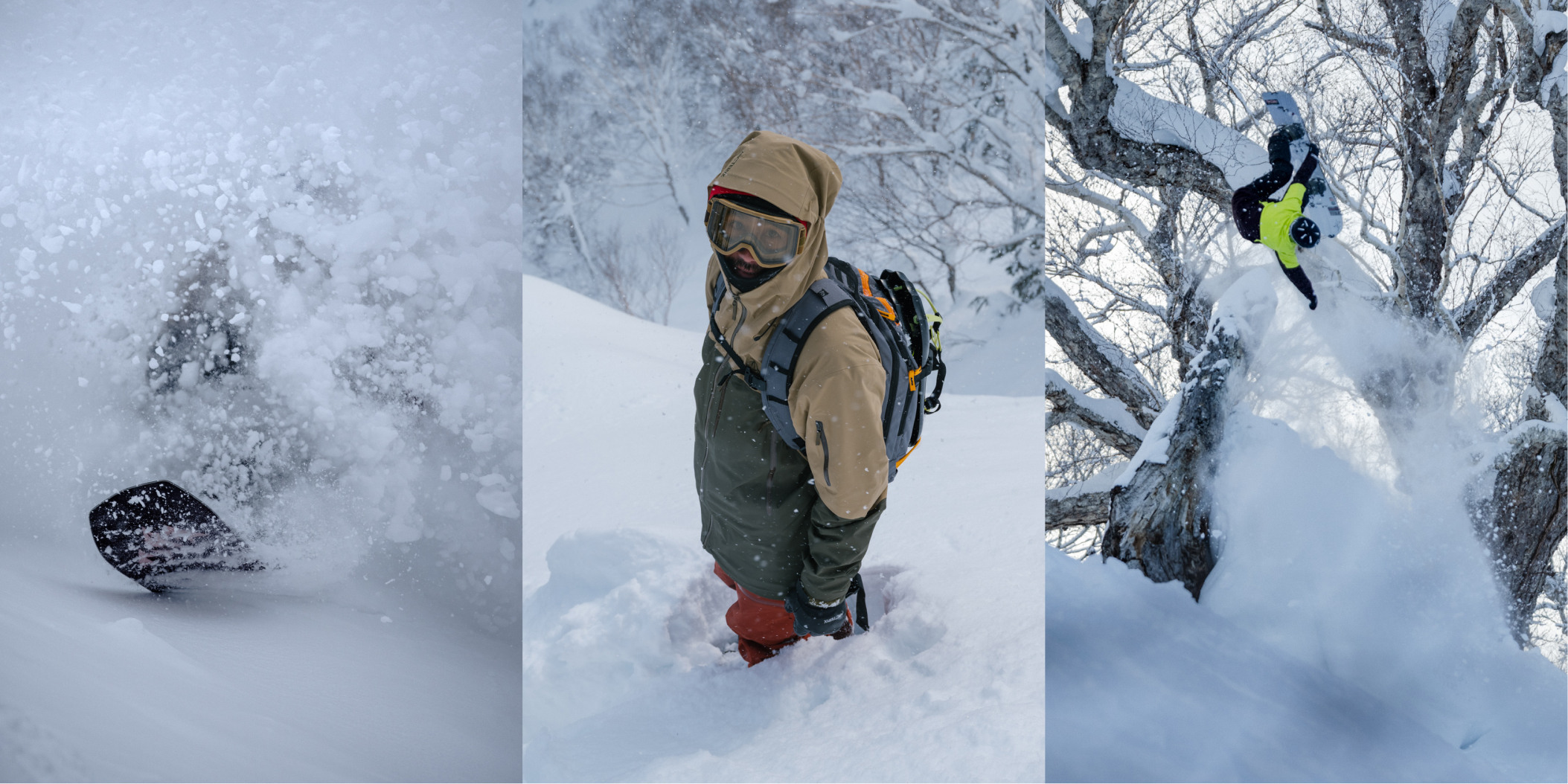
Today, Tadashi is back at his home resort to share his stashes from his younger years with the Arc’teryx snowboard team, keen to see what a new generation of riders can bring to the terrain he’s become intimately familiar with over the years. Leaning into the role of host, he looks on as Sean Miskiman, a fellow Arc’teryx athlete, cuts snow into neatly organized blocks. There’s no doubt Tadashi can still ride at a high level, but today his mind is set on making sure the riders around him are well set up for success. Plunging downhill through waist-deep snow, his curiosity gives way to excitement as he starts to see what Sean has his eye on. Standing a few metres ahead of the lip of the jump, Sean zeroes in on a tree hunched over under the weight of the snowpack.
“I’m thinking Miller flip,” says Sean.
Tadashi’s English has faded since he moved back home from Whistler in 2016, but some words have not escaped him. Fifteen years prior, a Miller flip (a frontside handplant where the rider flips all the way around) would be one of the tricks that would help grow Tadashi’s legend in the Whistler backcountry. There are still plenty of tricks in his bag, but today he’s opting to keep things grounded. While the two might be more than 20 years apart in age, and their hometowns separated by the Pacific Ocean, Tadashi and Sean’s career paths and riding styles are remarkably similar.
Like Sean, Tadashi got his start on the slopestyle circuit. After some success in Japan, Tadashi started to get global recognition, competing in the inaugural Toyota Big Air in Sapporo—a competition that over its 15-year lifespan featured snowboard icons and prize purses ballooning into the hundreds-of-thousands range. To be included in this event represented a major step in Tadashi’s career, but more importantly, a moment of personal growth.
“My parents saw a change in me after that. I was shy, and snowboarding helped me grow,” Tadashi recalls.
But podiums were never what Tadashi was chasing. Even with mainstream success, he couldn’t shake his dreams of riding in British Columbia, unhindered by the rules and restrictions of competition. He knew that was how he would grow as a rider.
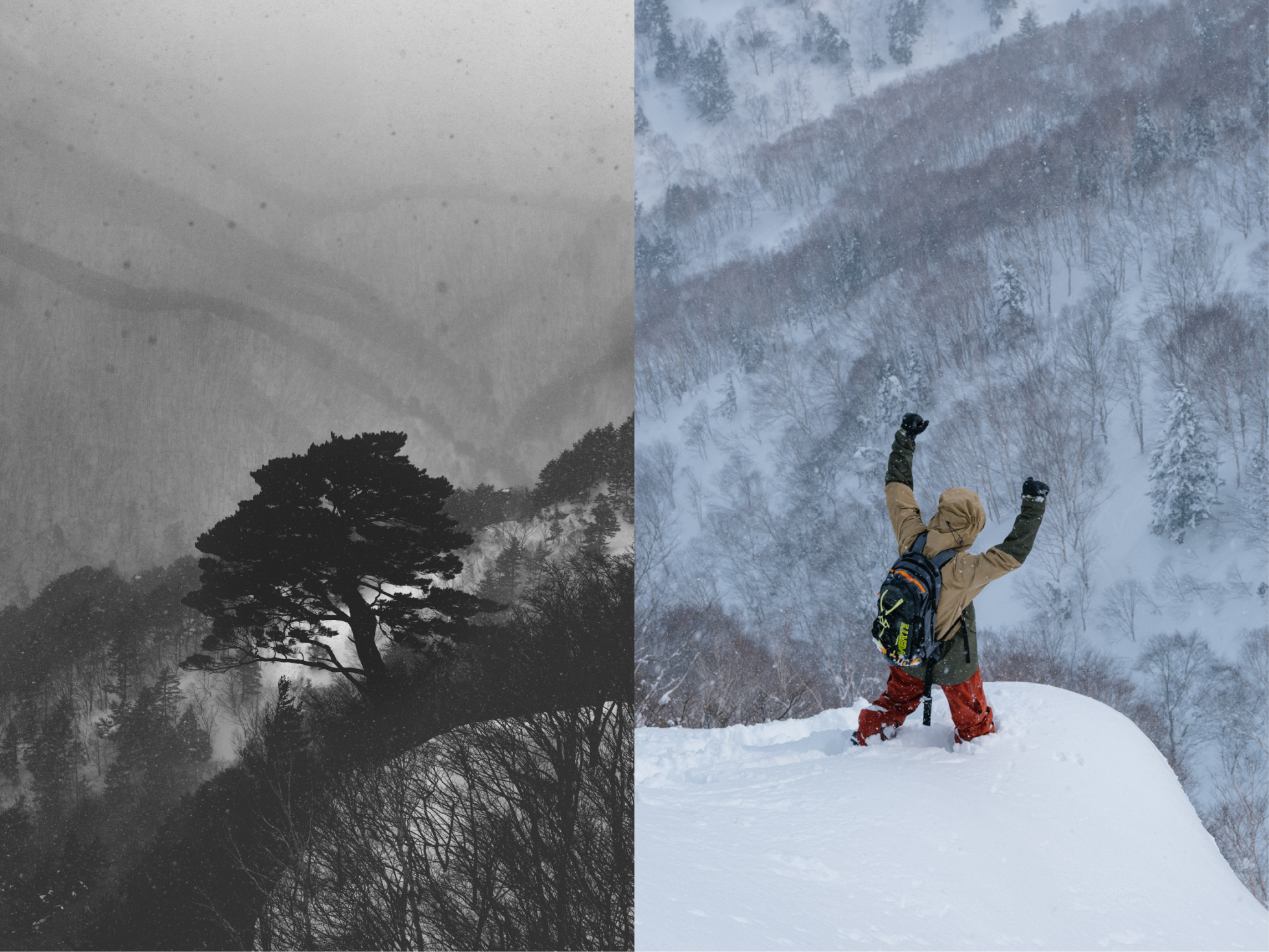
“My parents saw a change in me after that. I was shy, and snowboarding helped me grow,” Tadashi recalls.
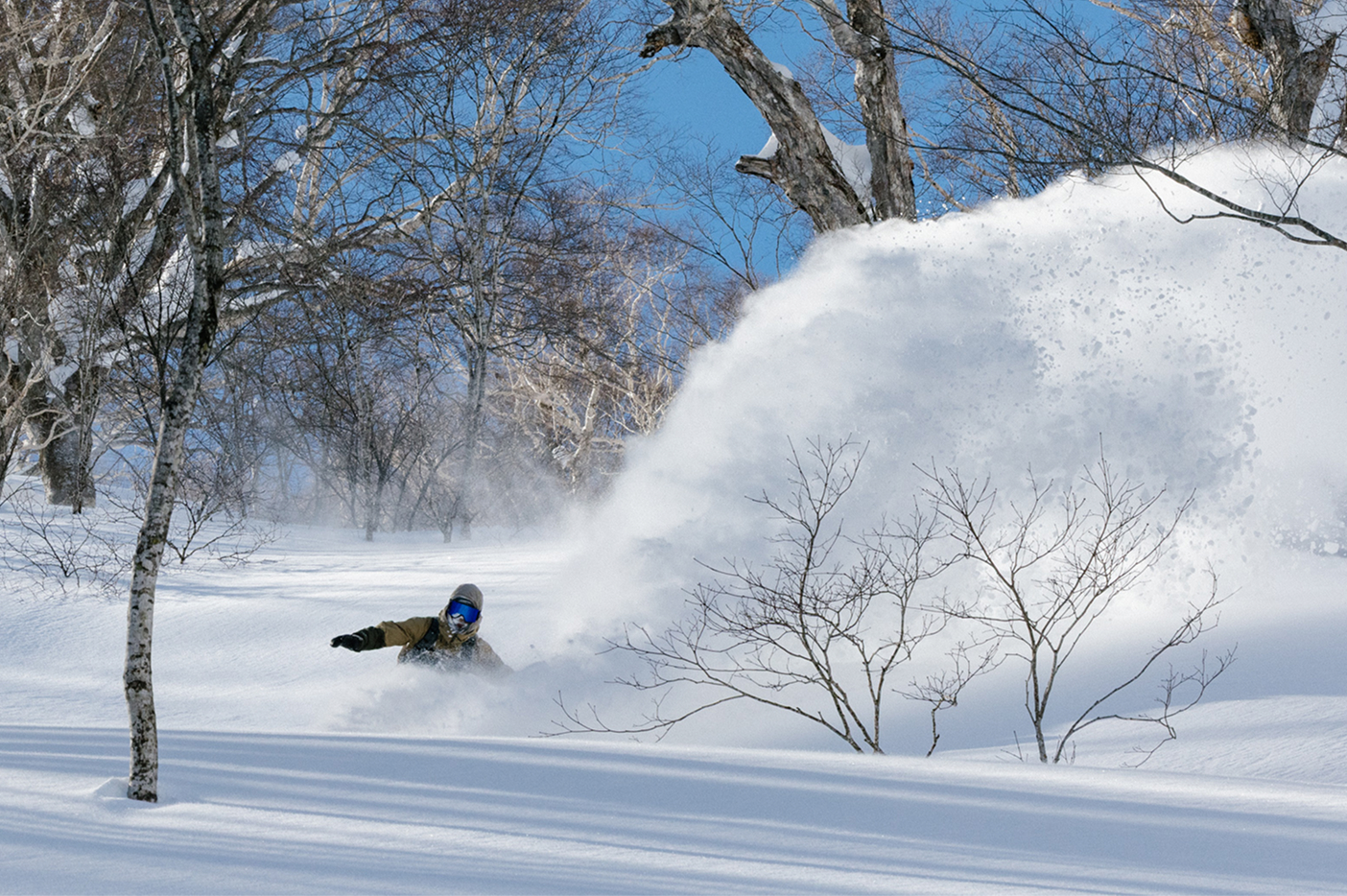
“If I stayed riding in Japan, it would widen the gap between myself and the rest of the world. I wanted to show that Japanese riders could be successful on a global stage.”
From Honshu to B.C.
In the mid-’90s, few snowboarders were bold enough to skip across the Pacific and dig into other snowpacks in the way Tadashi chose to when he moved to Whistler, B.C. Today, the global network of storm chasers has evolved, which is why Tadashi, Sean, and the rest of the Arc’teryx team are in Japan.
After putting the final touches on his in-run, Sean eventually drops in, popping, flipping, and leaving nothing more than a fist-sized channel in the snow atop the hunched-over tree. Beaming at the site of a stomped trick, Tadashi’s reverence for the process of filming and the camaraderie of spending time out with a crew working towards a common goal is as alive as ever, bubbling just below the surface of his permanent smile. This is the essence of what keeps Tadashi engaged. The indescribable feeling that comes from the work-reward process of days spent stacking clips, and the eventual compilation of those moments in a video part—the perfect blend of clips and music, edited together to inspire generations of riders. It’s a process that made Tadashi’s name ubiquitous in the snowboard industry.

Sean Miskiman, Miller Flip
Tadashi’s ascent occurred during a time when snowboarding had momentum. After its Olympic debut in 1998, the International Olympic Committee decided to give the sport a second shot in Salt Lake City. The other side of the sport, freeriding, was also having its moment, with film production companies like Mack Dawg Productions and Standard Films releasing annual projects that left the tight-knit snowboard community at the time in awe. The riders, production companies, and brands that supported the movement were charting a whole new course for the sport. Connected through the Whistler backcountry scene, Tadashi got the chance to film with Mack Dawg, putting together segments in films like Shakedown that still stand the test of time. But even with his home, truck, and snowmobile all in Whistler, his family, friends, and the mountains he first fell in love with were calling him back to Japan.
After more than a decade living in Whistler, and a stack of video parts with North American–based production companies, Tadashi wanted to shine the spotlight on his country mates with his own production company, Heart Films.
“I started Heart Films to show Japanese riders in world-class terrain,” says Tadashi. “Japanese people couldn’t imagine themselves riding that way without being able to see it.”
Bringing together a crew of Japanese riders who had made the leap to live in Whistler, Heart Films put out projects that put Tadashi and his peers on the map. In 2006, Tadashi’s work was rewarded when his then-sponsor, Burton, made him the first-ever Japanese rider with a pro-model snowboard. But after more than a decade of groundbreaking video parts, the industry started to shift away from video parts and print magazines, the two avenues where Tadashi had made a name for himself. Sensing his chapter in Canada was coming to a close and feeling the pull of a home range that he hadn’t fully appreciated, he moved back to Japan.
Simple Pleasures
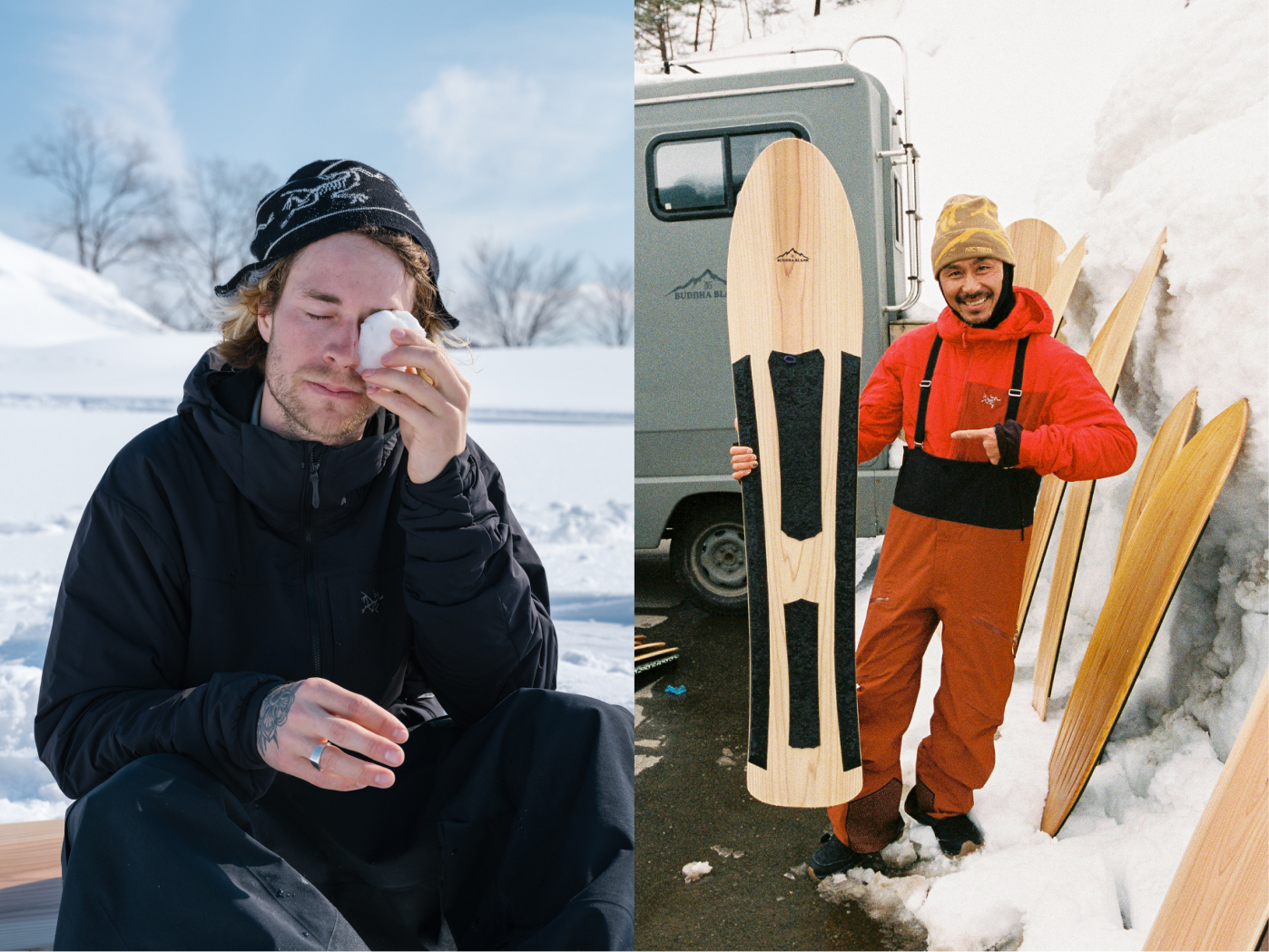
At an abandoned ski hill not far from his home mountain, Tadashi is surrounded by his community. He’s taking a day between storm cycles alongside the Arc’teryx team to enjoy a style of riding that connects back to the nascent days of the sport—riding bindingless boards, or in Japanese, Yuki-ika. When storms unload metres of snow in a matter of days, systems like chairlifts and bindings start to overcomplicate things, and being strapped in feels frivolous. But when the snow isn’t perfect, Yuki-ika humbles even the strongest riders. There’s some snow in the forecast, but for now Tadashi and the team are playing the hand they’re dealt.
A relatively low-speed crash at the bottom of the slope leaves rider Severin van der Meer with a black eye. As he ices his wound with cold snow and sake, Elena Hight slowly makes her way down the sun-crusted slope, taking falls and laughing the whole way down. Tadashi and his wife, Kana, take it all in from the bottom.
In a few days, Tadashi will head back to his other job, working as an arborist. Structurally, Tadashi’s winter schedule isn’t so different from the action-packed winters of the past, biting off big chunks of work at a time and finding space in between to ride.
There are fewer cameras, less obsessing over the forecast—but the fire is still there. And after seeing Sean throw down in ways that reminded him of his days spent in the spotlight, he’s keen to make a little more space for snowboarding once again.
“I work full-time now, but that doesn’t mean I can’t ride. I want to show people you can still enjoy the mountains, even with a full-time job,” says Tadashi.
Every step of the way, a desire to show others what’s possible has been central to Tadashi’s philosophy, whether it’s latching on to a new sport, uprooting his life to chase his dreams in a country he had never visited, or now, back in Japan, sharing with others the terrain that shaped his riding from an early age.
A few days removed from their sun-soaked Yuki-ika session, the crew is now chasing a storm system at a resort further south. Just a week ago, Tadashi was reluctant in front of the camera, letting Sean and the other riders take the lead. Today, he’s gone from host to shot-out-of-a-cannon, upping the level of riding alongside Robin Van Gyn and Joe Lax, buzzing with energy at another chance to put his signature on a new film project—almost 30 years into his professional career. Alongside his appetite to ride, his one-of-a-kind board control and ability to generate speed are on display once again.
“Can’t be all stomps and perfect turns! Gotta be some bails,” Robin exclaims, watching Tadashi take a little too much speed into a small convexity that was begging for a slash, the moment ending in a high-speed somersault.
Laughing mid-tomahawk and eventually coming to a halt, Tadashi looks down slope.
“I wanna try one more!”